What Happens When Personalization Is Actually Personal?
What should it looks like when technology knows you well?
The best personalization I’ve ever experienced didn’t leave a mark.
I realized this when someone asked me to name an example. I sat with it for a while. And the ones that actually worked? I couldn’t remember them. Not because they didn’t happen, but because they didn’t feel like personalization. They just felt like the experience was right. I wasn’t aware of being seen. I was just… helped.
The only example I can actually name is working with an AI agent. Which I know is a little like a magician saying the only magic trick that fools them is one they built themselves. I can name it because I understand the mechanism underneath, not because it announced itself. When it’s working well, it doesn’t say “based on your preferences” or “given your typical approach.” It just handles things differently because it knows. The way a good colleague would.
If I said something out of character, it wouldn’t recite my history back to me. It would just ask why. Have your thoughts changed? What made you approach this differently than you did last week. That’s it. The knowledge is there. It shapes the interaction. But it never becomes the interaction.
That’s what good looks like. And most of what we’ve been building is missing this.
In a recent post I asked a question: what companies become possible when intelligence is abundant? Not existing businesses with AI added on but new kinds of organizations that weren’t possible with the old economics.
There’s a question hiding inside that one that I didn’t get to. What experiences become possible when we use intelligence to make personalization part of the experience — not the experience itself?
Because right now, personalization is the product for most companies. It’s the feature they ship, the metric they track, the thing they put in the pitch deck. “We personalize.” It’s a noun. A deliverable they can point at and say, look, we did that.
But the best version of it isn’t something you point at. It’s something I talk about when I think about what makes people love your products.
The best tools are the ones you don’t notice. A great chef’s knife feels like an extension of their hand. A great writer’s pen disappears, leaving only the words. The ultimate goal of product design is to create a tool so intuitive that it becomes invisible, allowing the user to focus entirely on their own goals, not on the interface.
Think about what sticks in your memory. It’s not the time an app got it right. It’s the time it got it wrong. The recommendation that made no sense. The ad that followed you across six websites for shoes you already bought. The email that opened with your first name and then proceeded to have no idea who you are.
Bad personalization is memorable. Good personalization is invisible. And we’ve somehow built an entire industry around measuring something that, when it’s actually working, should be undetectable.
That’s a weird incentive structure. You can track clicks on “recommended for you.” You can A/B test the label. You can measure engagement with the personalized module versus the generic one. But you can’t easily measure the moment someone just felt like the experience understood them — because in that moment, they weren’t thinking about the system at all. They were just doing the thing they came to do.
There’s a reason companies keep announcing their personalization and it’s not a design failure. It’s business analytics by design.
When you collect data about people, someone eventually asks what you’re doing with it. The personalized recommendation is the answer. See? We used your data to help you. The label “because you watched this” isn’t for the user. It’s for the quarterly review or the privacy audit. It’s proof of value in a system that needs to justify its own existence.
The announcement is a receipt. And the receipt is there because the company needs it, not because the user does.
Changing this isn’t just a UX task. It’s a different theory of what the data is for.
This is where agents enter the picture. And we should be clear headed about what they change and what they don’t.
An agent can hold more context about you than any previous technology. It can remember your preferences, your patterns, your history and make decisions about what to do about it. But that doesn’t automatically make it better at personalization. It just makes it more powerful at whatever version of personalization the humans behind it chose to build.
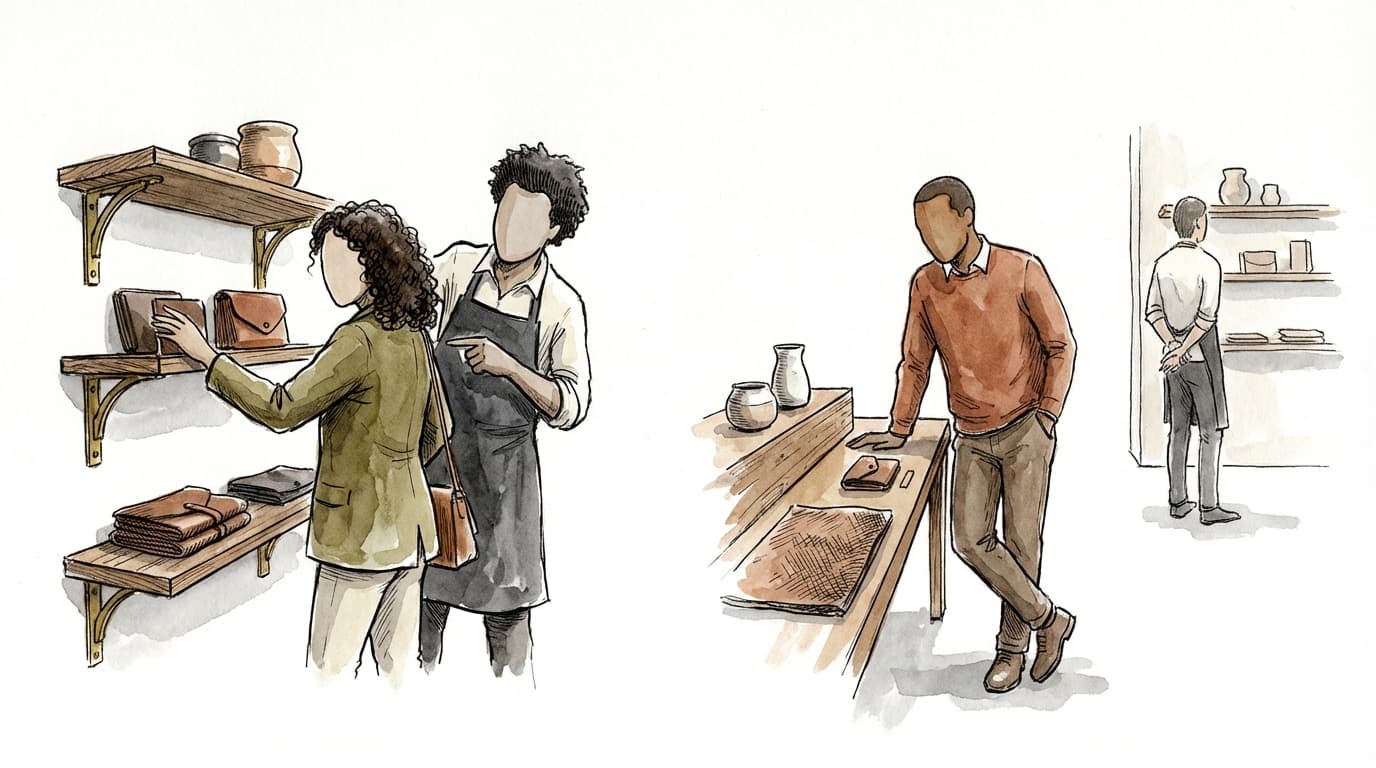
Imagine two retail salespeople. One follows you around narrating everything you touch. The other notices you browsing, gives you space, and shows up when you actually need help. Both are paying attention. One makes you want to leave. The other makes you want to come back.
Most of what’s being built right now is the first salesperson with a better memory. And that’s not a technology problem. It’s a training and measurement problem.
But the version that actually matters is the second one. The one who uses what they know to make the experience feel right without making it awkward and annoying.
We’re building the next generation of personal technology right now. Agents that will know our preferences, our patterns, our history, our context.
The question isn’t whether they’ll have that information. They’re going to have plenty of information. That part is already happening. The challenge will be building personalization you can’t put in a pitch deck. The kind where success looks like a user who never once thought about the system. Who just did the thing they came to do and left feeling like it was easy.
That’s harder to measure. Harder to sell internally. And it’s the only version people actually want. They just haven’t had the option yet.
Kenzie Notes
Analog wisdom for a digital world
A weekly page from The Workshop — frameworks, stories, and practical thinking on leadership, systems, and the craft of building things that matter. Wednesdays.