The Gift That Isn’t A Gift
What we get wrong about personalization and why it’s matters more now
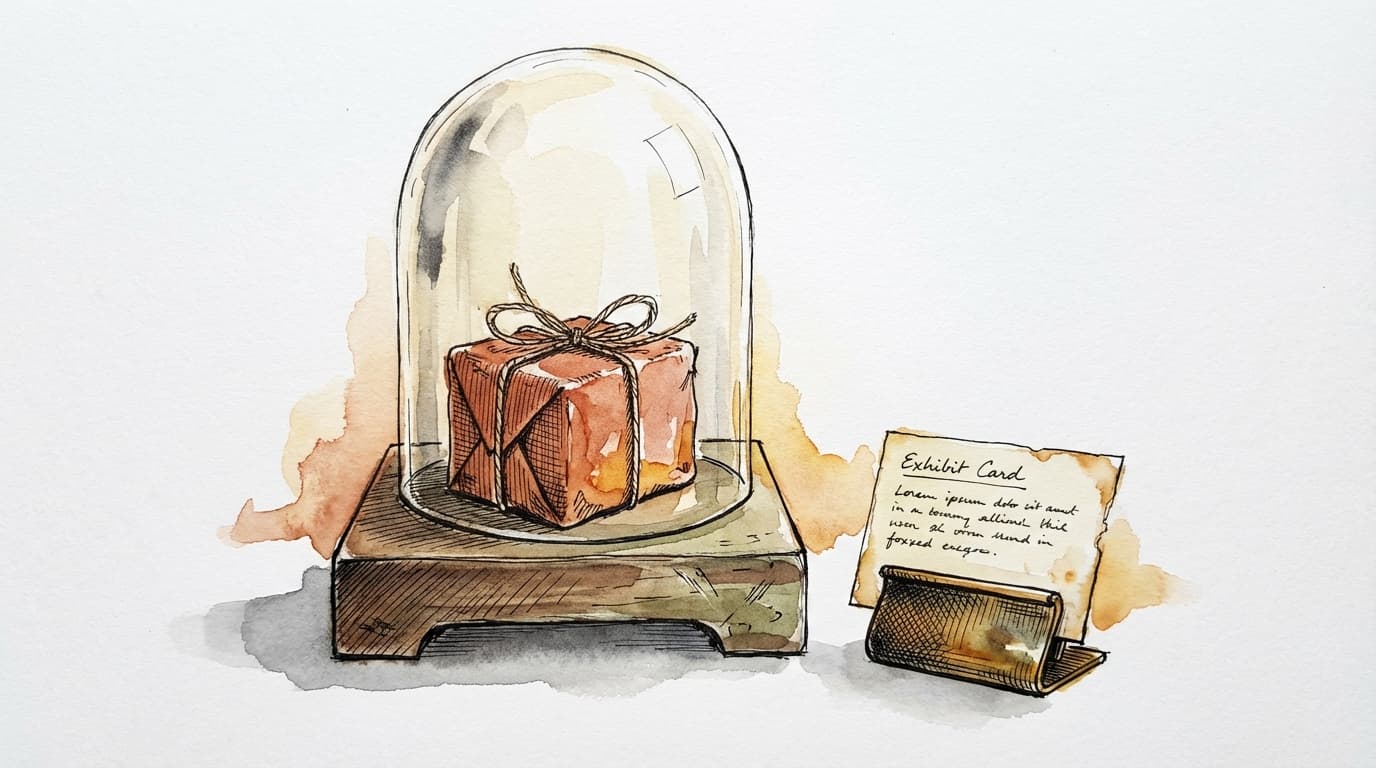
Imagine if someone had shown up to your college class one day with a gift.
“Hey, I noticed you had Starbucks the other day, so I got you this cup warmer. It was $14.99. Hope you like it!”
That’s a little odd, but okay. Maybe they’re just thoughtful.
The next day they’re back. “I wanted to get you a cookie to go with your coffee. And I loved that red sweater you had on yesterday so…here are some shoes that would match it.”
Now you’re not thinking about the gift. You’re thinking about what else they noticed. What else they have. What you did or said or wore that you assumed was just yours — that apparently wasn’t.
This is the story most people tell when they talk about “creepy” technology. But I think we’re telling it wrong. The problem isn’t that the person knows things. It’s that they keep telling you that they know these things. Every gift comes with a receipt. Every seemingly innocent gesture is a demonstration of surveillance wrapped in helpfulness.
We’ve gotten really comfortable with this, but I think the distinction matters more than we’re willing to admit.
We all know that there’s a version of knowing someone that feels like care, and a version that feels like we’re being watched. The difference isn’t just the information, it’s what you do with it.
A good friend who knows how you take your coffee doesn’t announce it. They just hand you the cup. The knowledge disappears into the gesture. But if that same friend said, “I got you oat milk because last Tuesday you mentioned you’ve been cutting dairy and I wanted you to know I remembered”, something shifts. Suddenly it’s not about the coffee. It’s about the fact that they were paying attention to very specific details and want you to know it.
We’ve built an entire era of digital products on that second version and called it personalization.
Every product has its own version of this now. Your name appears where it didn’t need to. The algorithm explains itself: “Because you watched this,” “Recommended for you,” “We thought you’d like this based on your recent activity” Each message a small reminder that somewhere, something has been watching, cataloging, and drawing conclusions about you.
And the effect isn’t delight. It’s a quiet question that didn’t exist before: what else do they have?
Rockwell got it right in his 1984 song “Somebody’s Watching Me,” and not in the Orwell way (although the irony is funny). He’s just an average man with an average life who just wanted to be left alone in his average home. The Twilight Zone he couldn’t shake is the one we all live in now. Ours just has better targeting.
This isn’t just a technology problem. It’s a pattern.
A few years ago I came back to the office and my boss pulled me aside, frustrated. My team had been working out of the conference room — background noise on, informal energy, the kind of organized chaos that high-functioning creative teams fall into naturally. They were productive. Genuinely, measurably productive. But she didn’t like how it looked. “What if an investor comes in?”
Her concern wasn’t about performance. It was about the optics of performance. The team was doing the work. She wanted them to look like they were doing the work.
That instinct didn’t stay in that conference room. Caring more about how the work looks than whether the work is working. I see it everywhere now. The most polished profiles, the perfectly lit videos, the content that never has a rough edge or an unresolved thought. Everything varnished.
Polish used to signal quality. Increasingly it signals something to hide.
What connects the creepy classmate, the optics-focused boss, and the over-produced influencer is this: they’re all optimizing for the signal instead of the substance. They’re displaying the evidence of a quality rather than just having the quality.
And people are getting good at detecting it. Not in a cynical way, but in the way you get good at anything when you’re surrounded by it long enough. We’ve been bombarded with performed authenticity for two decades. The instinct to recognize it has sharpened.
This is about to matter a lot more. Because AI is coming into our lives carrying more information about us than any previous technology — and the design choices being made right now will determine whether it feels like a creepy classmate or a trusted collaborator.
The best personalization I’ve ever experienced didn’t feel like personalization at all. It just felt like someone paid attention. The knowledge disappeared into the gesture. That’s the standard worth building toward. Not “how much do we know about this person” but “can we use what we know without making them feel known?”
Kenzie Notes
Analog wisdom for a digital world
A weekly page from The Workshop — frameworks, stories, and practical thinking on leadership, systems, and the craft of building things that matter. Wednesdays.
Related Ideas
The Friction Is Gone: Who Are You Without Your Tools?
Who were you before the tools? What AI is really exposing about how we work and who we've become
The Same Fight Happens Every Time a New Tool Shows Up
Star Wars, special effects, and the pattern that keeps repeating every time technology disrupts a creative field.